
Doesn’t loving yourself mean treating yourself well with top-notch pleasures? But my friend has disproved my idea. So what does it really mean to love yourself?
I’m also curious about this question! Why do people tell me how important it is to love yourself, but they can’t tell me clearly, what is the difference between loving yourself and not loving yourself?
When I learned to love myself, it dawned on me that the difference is so different.
Next, let’s see what changes will be made!
Table of Contents
The Difference Between Self-Love and Conceit
At this point, you may be thinking, “But I already love myself very much. I treat myself on a regular basis, and I feel very happy! Also, I’m living the good life, there’s no issue in the self-love department for me!”
Let me put it this way:
You can either derive your sense of happiness from someone or something outside of yourself relying on a constant need for replenishment, OR you can take control of your emotions, keep a full heart, and tap into your inner light carrying your happiness with you wherever you may be. The choice is yours.
Here’s a quick analogy:
You can choose to be the sun, or you can choose to be fire! What is the difference between these two? One is a core source of energy that emits light on its own. It needs no assistance. The other needs to be ignited in order to emit light. Why rely on something else to light you up when you can choose to be perpetually bright?
When I made this realization, I had a very serious conversation with myself, and here’s what I discovered:
“One of the major mindset shifts between being a people pleaser and authentic self-love is to go from outcome-dependent to process-oriented.”
It’s like this:
Regarding health:
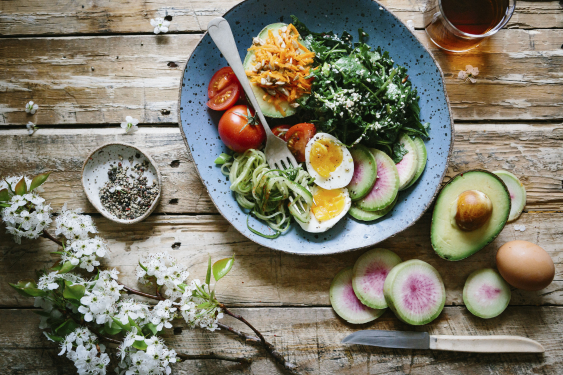
Rather than perpetually chasing the societal construct of being skinny and seeking external admiration, I made a pivotal choice to prioritize my health. In a culture obsessed with quick fixes and fad diets, I opted for a different path.
I embraced a lifestyle of nourishing myself with small, frequent, and wholesome meals. I committed to regular exercise, initiated a meditation practice, and prioritized regular medical check-ups. This shift was a deliberate act of self-respect, a conscious decision to honor my well-being rather than seeking external validation or attention from others.
Regarding Appearance:

Instead of seeking to garner attention and acceptance from others by attempting to rapidly grow six-pack abs (or my booty) and purchasing all the beauty products the media tells you that you need to be beautiful, I decided that I want to live a pain-free life, and improve my physical and mental strength so I can have the drive, energy, and motivation to travel more to discover the beauty this world has to offer.
This is as opposed to living a sedentary lifestyle on the couch or in front of the computer. The idea here, again, is to respect yourself, take care of your body, and embrace new experiences to honor yourself (without regard for others’ approval). Life is meant to be lived. Fill your cup!
Regarding Ego:

It used to take me so much mental energy as a people pleaser chasing after money, power, and respect. Living a life dictated by what others thought of me and what society (and the media) said I was “supposed to do” was emotionally exhausting. There was an emptiness inside.
This kind of thinking robs extraordinary people of their confidence each and every day. Moreover, once we accept this as the “right way” to live, we start to judge others for being different. I didn’t want to feel insignificant anymore, so I decided to live in peace and enjoy the laughter, friendship, and optimistic reality that life has to offer. I stopped worrying, started letting go, and cut out any and all negativity.
Be the center of attention? Or do you want to be the best version of yourself?
These actions can make you a better and more beautiful person organically, both on the inside and on the outside. Have you noticed the difference? You become an authentic and congruent person instead of living in constant doubt. No more judging others for not following “the rules” that are brainwashed into us from childhood.
The key point is your thinking and outlook become different by understanding what it means to love yourself. Keep in mind that just because someone is different doesn’t mean that they’re wrong.

And guess what?
That’s the real difference between self-love and conceit.
Everything you do is to “please yourself,” not for the sake of trying to be someone else or fit into a mold! Each and every one of us is unique. Embrace that!
“It’s great to have a purpose in life, but only after you’ve built a foundation of self-worth will the fruit be sweeter!”
Here’s the best part (After Love yourself):
You will find that when you know how to truly love yourself, you will also know how to love the people around you. When you become comfortable and accept the real you, you will be more respectful and accepting of other people and let them be themselves!
And all those things you were chasing?
They will become a natural part of you. You will attract anything you want into your life with your newfound energy and confidence. Money? A loyal partner? An amazing circle of friends? They will come to you naturally by trusting the process of loving yourself instead of being in a rush to succeed because “that’s what you’re supposed to do!”
Pretty amazing, right?
“By building inner strength & confidence, you transform the core of your inner universe, and everything around you will become better and better.”
5 FAQ Questions & Answers
Q1: How is self-love different from being selfish or self-centered? Selfishness takes from others to fill yourself up. Self-love fills yourself up so you have something genuine to give. As this article illustrates through the sun and fire analogy, a person who truly loves themselves becomes a steady, self-sustaining source of warmth – not someone constantly drawing energy from the people around them. Paradoxically, the more deeply you love yourself, the more you’re able to love and accept others, because you’re no longer projecting your own unmet needs onto them or competing for validation.
Q2: Why does people-pleasing feel like self-love when it’s actually the opposite? Because in the short term, gaining approval from others creates a temporary feeling of safety and connection – which can feel like happiness. But it’s borrowed happiness, dependent on constant replenishment from outside sources. True self-love, as described in this article, is process-oriented rather than outcome-dependent. You make choices because they align with your values and your wellbeing, not because of what others will think. The distinction is subtle but transformative: one exhausts you, the other sustains you.
Q3: What are the first real signs that I’m starting to love myself more? The changes often show up in the small decisions before the big ones. You start choosing sleep over scrolling because you actually want to feel good. You stop over-explaining yourself when you say no. You feel less urgency to fill silence with self-deprecating humor. You notice that certain relationships drain you – and that awareness alone feels new. Self-love rarely announces itself dramatically; it tends to show up quietly in a hundred tiny moments where you choose yourself a little more honestly than you did before.
Q4: Is it possible to love yourself when life circumstances are genuinely difficult? Yes – and this is actually where self-love is most tested and most valuable. Self-love doesn’t require your life to be going well; it means treating yourself with care and compassion precisely when things are hardest. During difficult seasons, self-love looks like not abandoning yourself through harsh self-criticism, seeking support without shame, and trusting that your worth isn’t contingent on your current circumstances. The foundation of self-worth, once built, is something you carry through the storms rather than something the storms take from you.
Q5: If I start loving myself, will my relationships change — and is that scary? They will change, and for some people that can feel unsettling at first. When you stop performing for others’ approval, some relationships may lose their dynamic — particularly ones that were sustained by your willingness to shrink yourself. But what tends to emerge in their place are connections that are more genuine, more mutual, and more nourishing. You attract people who appreciate the real you rather than the version of you that was working to be liked. That’s not loss — even though it can feel like it initially. It’s alignment.
“This article reflects personal experience and is not a substitute for professional therapy.”