

Table of Contents
The concept of inner child wounds delves into the lasting impact of early experiences on our emotional and psychological well-being as adults.
These wounds, often stemming from childhood trauma, neglect, or unmet emotional needs, can shape our beliefs, behaviors, and relationships well into adulthood.
Left unhealed, they can manifest as self-doubt, fear of intimacy, or patterns of self-sabotage.
Healing and nurturing the inner child is not just a therapeutic exercise; it’s a profound journey of self-discovery and transformation.
By acknowledging and addressing our inner child wounds, we empower ourselves to cultivate resilience, self-compassion, and emotional freedom.
In this article, we’ll explore the significance of inner child healing and provide actionable strategies to support this transformative process. Join us as we embark on a journey of self-discovery and healing for a more fulfilling and authentic life.

Understanding the Inner Child
Why is inner child trauma the result of emotional and psychological damage experienced in childhood?
These wounds develop when a child’s emotional needs are unmet, or they experience trauma, neglect, or dysfunctional family dynamics.
The term “inner child” refers to the vulnerable and authentic part of ourselves that retains memories and emotions from childhood.

Common types of inner child wounds include:
- Abandonment: This occurs when a child feels deserted or neglected by caregivers, leading to deep-seated fears of rejection and insecurity in relationships.
- Neglect: Emotional, physical, or psychological neglect can result in feelings of unworthiness, low self-esteem, and difficulty forming healthy attachments.
- Emotional Trauma: Experiencing emotional abuse, witnessing domestic violence, or living in a chaotic environment can create emotional scars that affect self-image and trust in others.
- Invalidation: When a child’s feelings and experiences are dismissed or invalidated, it can lead to a persistent sense of not being understood or accepted.
These wounds can impact adult well-being by influencing thoughts, beliefs, and behaviors. Recognizing and addressing inner child wounds is essential for healing and cultivating emotional resilience. Through compassionate self-awareness and therapeutic techniques, individuals can begin the process of healing their inner child and reclaiming their emotional well-being.

Signs and Symptoms of Unhealed Inner Child Wounds
Unhealed inner child wounds can manifest in various ways during adulthood, impacting emotional well-being and interpersonal relationships. Recognizing these signs is crucial for initiating the healing process.
Here are common indicators of unhealed inner child wounds:
- Difficulty with Intimacy: Adults with unresolved inner child wounds may struggle to form and maintain intimate relationships. Fear of vulnerability or abandonment can lead to emotional distancing or unhealthy attachment patterns.
- Low Self-Esteem: Persistent feelings of inadequacy, self-doubt, or self-criticism often stem from childhood experiences of neglect or invalidation. Unhealed inner child wounds can undermine self-confidence and hinder personal growth.
- Emotional Reactivity: Unresolved childhood trauma may contribute to intense emotional reactions to triggers or stressors in adulthood. Individuals may experience mood swings, anxiety, or anger that seem disproportionate to the present situation.

- Perfectionism: The need for perfection and fear of failure can be rooted in childhood experiences of pressure or criticism. Unhealed inner child wounds may drive perfectionistic tendencies as a coping mechanism to gain approval or avoid disappointment.
- Self-Sabotage: Engaging in self-destructive behaviors such as procrastination, substance abuse, or toxic relationships can be linked to unresolved inner child wounds. These behaviors may serve as unconscious attempts to cope with emotional pain.
- Avoidance of Emotions: Difficulty expressing or processing emotions is common among individuals with unhealed inner child wounds. Suppressing emotions can lead to emotional numbness or dissociation from feelings.
- Repetitive Relationship Patterns: Unresolved childhood wounds often manifest in recurrent relationship dynamics. Patterns of attracting similar partners or encountering familiar conflicts may indicate underlying issues that require healing.
Recognizing these signs is the first step toward healing. By acknowledging and addressing inner child wounds with compassion and therapeutic support, individuals can cultivate emotional resilience and foster healthier relationships with themselves and others.

Methods and Techniques for Inner Child Healing
Healing your inner child involves engaging in specific practices and techniques designed to nurture, validate, and heal the wounded aspects of your psyche. There are various approaches to inner child healing along with actionable steps and exercises you can try on your own.
Inner child meditations are powerful tools for connecting with and healing your inner child. These guided visualizations and meditative practices create a safe space for exploring childhood memories and emotions. Here’s how to practice inner child meditation:
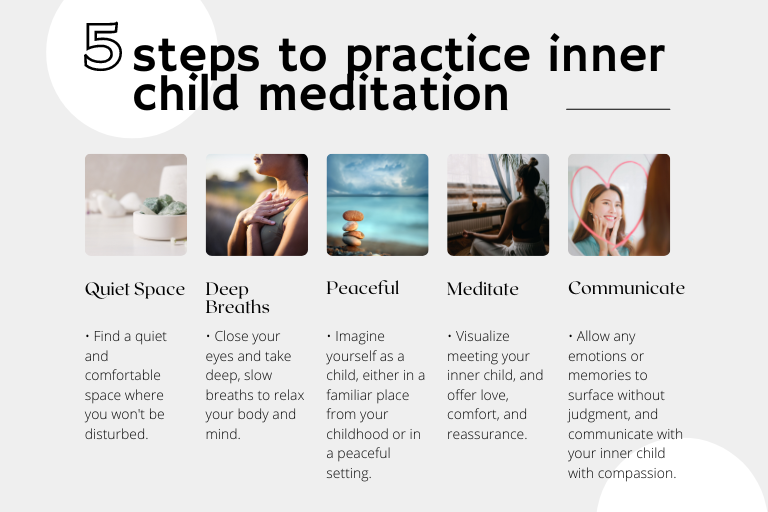
Inner child work is often facilitated by therapists trained in techniques such as Inner Child Therapy or Inner Child Healing.
In therapy, you can explore past traumas and unresolved emotions in a safe and supportive environment.
Here are some therapy-based exercises:
1. Journaling: Write letters to your inner child, expressing empathy, understanding, and validation.
2. Dialogue: Engage in inner dialogues between your adult self and your inner child, exploring feelings and needs.
3. Reparenting: Practice nurturing behaviors towards yourself that you may have lacked in childhood, such as self-care routines or self-soothing activities.

The creative expression can be a cathartic way to access and release emotions stored within the inner child.
Consider exploring these creative outlets:
1. Art Therapy: Use drawing, painting, or sculpting to express emotions and memories from childhood.
2. Writing: Explore creative writing or poetry to give voice to your inner child’s experiences and feelings.
3. Play and Movement: Engage in playful activities like dancing, playing music, or spending time in nature to reconnect with your inner child’s sense of joy and spontaneity.

Incorporate daily practices that promote self-nurturing and healing:
1. Inner Child Affirmations: Repeat affirmations that affirm your worthiness, lovability, and resilience.
2. Visualization: Envision yourself embracing and comforting your inner child during moments of distress or insecurity.
3. Establish Boundaries: Practice setting healthy boundaries in relationships to protect and honor your inner child’s needs.
Consider working with a therapist or counselor specializing in inner child healing for personalized guidance and support. Additionally, joining support groups or online communities focused on inner child work can provide validation and encouragement in your healing journey.
By integrating these methods and techniques into your life, you can embark on a transformative inner child healing journey. Remember to approach this process with patience, compassion, and openness to healing the wounded parts of yourself. Each step taken towards healing your inner child brings you closer to emotional liberation and a deeper sense of wholeness.

Self-Care Practices for Nurturing Your Inner Child
Self-care is a crucial part of healing your inner child. It provides the support and care needed to address past wounds and promote emotional well-being. In this text, we will discuss the reasons why self-care is important in the healing journey. We will also share practical tips tailored to nurturing your inner child.
Why Self-Care is Important for Inner Child Healing:
Self-care is essential for healing your inner child because it helps to cultivate a compassionate and supportive relationship with yourself. When you prioritize self-care, you create a safe and loving environment that promotes healing and self-discovery. This intentional self-nurturing also reinforces feelings of worthiness and self-compassion, which are key aspects of inner child healing.

Practical Self-Care Tips for Inner Child Healing:
Engage in Self-Soothing Activities:
Identify activities that bring you comfort and relaxation, such as taking warm baths, listening to soothing music, or practicing gentle yoga.
Use sensory tools like aromatherapy (e.g., calming essential oils) or tactile objects (e.g., soft blankets or stuffed animals) to create a sense of safety and comfort.
Set Healthy Boundaries:
Establish and communicate clear boundaries in relationships to protect your emotional well-being.
Learn to say no to activities or commitments that drain your energy or trigger stress, honoring your inner child’s need for safety and autonomy.

Practice Inner Child Affirmations:
Create affirmations that resonate with your inner child’s needs and desires, such as “I am deserving of love and kindness,” or “I am safe and protected.”
Repeat these affirmations regularly, especially during moments of self-doubt or vulnerability, to reinforce positive beliefs and self-worth.
Connect with Playfulness and Creativity:
Embrace activities that evoke a sense of play and creativity, such as drawing, dancing, or exploring nature.
Allow yourself to engage in spontaneous and joyful experiences that awaken your inner child’s sense of wonder and curiosity.

Prioritize Rest and Relaxation:
Ensure you get adequate sleep and restful downtime to recharge your mind and body.
Create a bedtime routine that promotes relaxation, such as reading a comforting book or practicing deep breathing exercises before sleep.
Seek Support and Connection:
Surround yourself with supportive and understanding individuals who validate your emotions and experiences.
Consider joining support groups or seeking guidance from therapists or counselors specializing in inner child healing.
Practice Mindfulness and Self-Compassion:
Cultivate mindfulness through meditation or mindful breathing exercises to stay present and attuned to your inner child’s needs.
Practice self-compassion by treating yourself with kindness and understanding, especially during moments of emotional distress or self-criticism.

By integrating these self-care practices in your daily life, you create a nurturing environment that supports inner child healing and fosters emotional resilience.
Remember that self-care is not selfish; it is a vital investment in your emotional well-being and overall growth. As you prioritize self-nurturing and inner child healing, you empower yourself to embrace authenticity, self-acceptance, and profound inner peace.

Overcoming Common Challenges in Inner Child Healing
Healing your inner child can be a transformative journey, but it’s not without its challenges. Addressing and navigating these obstacles is crucial for sustained progress and growth.
Below are common challenges in inner child healing and strategies to overcome them:
1. Resistance and Avoidance:
Challenge: It’s common to encounter resistance or avoidance when facing deep-seated emotional wounds from childhood. Some may feel overwhelmed or scared to confront painful memories and emotions.
“Strategy: Approach healing with gentleness and patience. Start by acknowledging your resistance without judgment. Break down the healing process into smaller, manageable steps. Seek support from a therapist or trusted friend who can provide guidance and encouragement.”
2. Emotional Intensity and Triggers:
Challenge: Unresolved childhood trauma can trigger intense emotional responses during inner child work. Confronting painful memories may lead to emotional overwhelm or heightened distress.
“Strategy: Practice grounding techniques, such as deep breathing or mindfulness exercises, to manage intense emotions. Set boundaries around the intensity and pace of your healing process. Allow yourself breaks and self-soothing activities when needed. Seek professional support if emotions become too overwhelming to handle alone.”

3. Inner Critic and Self-Doubt:
Challenge: The inner critic may surface during inner child healing, fostering self-doubt or negative self-talk. Beliefs of unworthiness or inadequacy may hinder progress.
“Strategy: Challenge the inner critic by replacing negative self-talk with self-compassionate affirmations. Practice cultivating self-acceptance and kindness towards yourself. Journaling can help identify and reframe limiting beliefs. Engage in self-care practices that reinforce feelings of self-worth and validation.”
4. Setbacks and Relapses:
Challenge: Healing is not always linear, and setbacks or relapses may occur along the way. Old patterns or triggers can resurface, leading to feelings of discouragement or frustration.
“Strategy: View setbacks as part of the healing process rather than failures. Reflect on triggers and setbacks with curiosity and compassion, exploring underlying emotions or unmet needs. Stay committed to your healing journey by revisiting self-care practices and seeking support from therapists or support groups.”

5. Fear of Vulnerability and Change:
Challenge: Inner child healing requires vulnerability and openness to change, which can feel uncomfortable or frightening.
“Strategy: Cultivate a safe and supportive environment for healing. Surround yourself with understanding and empathetic individuals who validate your experiences. Practice self-compassion and acknowledge the courage it takes to embrace vulnerability. Celebrate small victories and progress towards healing.”
6. Patience and Persistence:
Challenge: The Inner child healing is a process that requires time, patience, and consistent effort.
“Strategy: Set realistic expectations for your healing journey. Celebrate incremental progress and honor your resilience. Stay committed to inner child work by integrating healing practices into your daily routine. Remind yourself that healing is a courageous act of self-love and self-discovery.”
By acknowledging and addressing these common challenges in inner child healing, you empower yourself to navigate obstacles with resilience and compassion. Remember that healing is a deeply personal journey, and each step forward is a testament to your strength and commitment to emotional well-being. Seek support when needed and honor the transformative potential of embracing your inner child with love and healing.

Seeking Professional Help
Embarking on the journey of inner child healing can be profound and transformative, but it’s essential to recognize when professional support may be beneficial. Therapists or counselors specializing in inner child work can provide invaluable guidance, tools, and a safe space to explore and heal childhood wounds. Here’s why and how to seek professional help for inner child healing:
Why Seek Professional Help:
Expertise and Experience: Therapists specializing in inner child work have specialized training and experience in addressing childhood trauma and healing techniques.
Safe and Supportive Environment: Therapy provides a confidential and non-judgmental space to explore deep-seated emotions and experiences.
Tailored Approaches: Professionals can offer personalized approaches and techniques based on your unique needs and healing journey.
Validation and Empowerment: Working with a therapist validates your experiences and empowers you to navigate challenges with guidance and support.

How to Find a Therapist:
Referrals: Ask for recommendations from trusted friends, family members, or healthcare providers.
Online Directories: Use online therapist directories to search for professionals specializing in trauma-informed therapy or inner child healing.
Professional Organizations: Explore websites of reputable organizations like the American Psychological Association (APA) or Psychology Today for therapist directories and resources.

Resources and Links:
Here are some reputable organizations and resources that offer support for inner child healing:
The International Society of Schema Therapy (ISST) / Website: Schema Therapy
Psychology Today Therapist Director/ Website: Find a Therapist
GoodTherapy.org/ Website: GoodTherapy
National Alliance on Mental Illness (NAMI)/ Website: NAMI
TherapyRoute.com/ Website: Therapy Route
When reaching out to therapists or counselors, consider scheduling initial consultations to discuss your goals and determine if their approach aligns with your needs. It’s essential to prioritize finding a professional who creates a sense of safety and trust, facilitating a collaborative and effective healing journey.
Remember that seeking professional help is a courageous step towards self-discovery and healing. You deserve support and guidance as you navigate the process of inner child healing. Embrace the opportunity to work with a skilled therapist who can empower you on your path towards emotional liberation and well-being.

Embracing the Journey of Healing
Inner child healing is a courageous and transformative journey that requires patience, self-compassion, and dedication. Here are some words of encouragement to empower you along the way:
– Embrace each step of your healing journey with patience.
– Be gentle with yourself and embrace your vulnerabilities with self-compassion.
– Allow yourself to explore and feel your emotions with openness and curiosity.
– Celebrate each milestone and breakthrough on your healing journey.
– Reach out for support from trusted friends, family members, or professionals.

– Explore creative outlets to connect with your inner child’s playful and expressive nature.
– Trust your intuition and inner wisdom as you navigate inner child healing.
– Approach this journey with an open heart and embrace all aspects of yourself.
– Remember that inner child healing is a profound act of self-love and reclaiming your authenticity.
“Trust the process and know that you are worthy of the transformative gifts that await on your healing path.”
5 FAQ Questions & Answers
Q1: What are the four main types of inner child wounds, and how do I know which one I carry?
The four most common are abandonment (fear of being left or rejected), neglect (feeling invisible or unworthy), emotional trauma (carrying pain from chaos, abuse, or instability), and invalidation (being told your feelings don’t matter). Most people carry more than one. A useful way to identify yours is to notice your most recurring relationship patterns and emotional triggers — they’re almost always pointing back to the original wound. For example, chronic people-pleasing often traces to invalidation; pulling away from closeness often traces to abandonment.
Q2: Is inner child work appropriate for everyone, or are there situations where it could be harmful?
For most people, the self-directed practices in this article – affirmations, journaling, meditation, creative expression, and self-care – are safe and beneficial. However, for those who have experienced severe or complex trauma, diving into childhood memories without support can sometimes feel destabilizing. If you find that inner child work consistently leaves you feeling worse rather than better, or if strong dissociation, flashbacks, or numbness arise, that’s a signal to seek guidance from a trauma-informed therapist before continuing independently.
Q3: What does it actually mean to “reparent” yourself, and is it really possible as an adult?
Reparenting means consciously providing yourself the consistent love, safety, validation, and guidance your caregivers couldn’t. Yes, it is genuinely possible – the adult brain retains neuroplasticity, meaning it can form new emotional patterns and associations throughout life. In practice, reparenting looks like: speaking to yourself with warmth when you make mistakes, following through on promises you make to yourself, allowing rest without guilt, celebrating your efforts, and refusing to abandon yourself in moments of pain the way you may have been abandoned as a child.
Q4: How is inner child meditation different from regular mindfulness meditation?
Standard mindfulness meditation focuses on present-moment awareness – observing thoughts, sensations, and breath without judgment. Inner child meditation goes one step further by using guided visualization to intentionally connect with your younger self. You might picture yourself at a specific age, in a specific place, and engage in an internal dialogue – offering comfort, asking what your younger self needs, or simply sitting with them. This directed inner focus makes it a more active healing practice rather than one of pure observation.
Q5: Can inner child healing improve my current relationships, or is it mainly about the past?
Both – but the relationship benefits are often the most immediately noticeable. When inner child wounds are unaddressed, they project onto current relationships: you may pull away from intimacy, seek constant reassurance, react disproportionately to conflict, or unconsciously recreate familiar painful dynamics. As those wounds heal, you stop needing your partner, friends, or colleagues to fill roles your caregivers couldn’t. You show up more grounded, more secure, and with far more capacity to give and receive love from a place of wholeness rather than need.
“This article reflects personal experience and is not a substitute for professional therapy.”