
Self-esteem and confidence are crucial for personal growth and well-being. When we lack self-esteem and confidence, it not only affects our relationships, job opportunities, and quality of life, but also impacts the education and modeling of the next generation. This guide provides simple steps and exercises to help incorporate self-esteem and confidence into our daily lives without even realizing it.
Table of Contents

Understanding Self-Esteem and Confidence
“Self-esteem” refers to how we view ourselves, while “confidence” refers to the belief in our abilities. A person with self-esteem and confidence is more positive about themselves, certain of their value and strengths, and willing to take on new challenges.
The building of self-esteem begins in early childhood when we learn about our abilities and strengths through exposure, experimentation, and learning about different things. Our parents, teachers, classmates, and friends, as well as our self-esteem, have a direct impact on the development of our self-esteem.
However, many people’s self-evaluations are biased and focus on how others perceive them, rather than their worth. It’s essential to shift our focus from changing how others perceive us to building a healthy self-worth that is not influenced by others’ comments.
Identifying Signs of Low Self-Esteem and Confidence
Low self-esteem and confidence can hurt a person’s life. Here are some signs that can help you recognize if you or someone you know is experiencing low self-esteem and confidence:
A. Behavioral indicators: Blaming oneself when things go wrong, not accepting compliments, and making self-deprecating jokes.
B. Emotional indicators: Feeling sad, depressed, anxious, ashamed, angry, or worthless.
C. Cognitive indicators: Believing that others are better than you, focusing on your negatives, and ignoring your accomplishments.
D. Impact on daily life and relationships: Being unable to accept the good things that others do for you, believing that you are not worthy of good things, and struggling to build relationships.
It’s important to remember that every person is unique and doesn’t need to be compared to others. By focusing on your strengths and accomplishments, you can improve your self-esteem and live a more fulfilling life.

How to Building Self-Esteem
To rebuild your self-esteem or self-confidence, you need to work on how you talk to yourself. It is essential to establish a good relationship with yourself to improve self-esteem and self-confidence. Here are a few steps you can take to practice talking to yourself:
Step 1: Cultivate self-awareness
Understand that everyone has unique values, and you don’t need to compare yourself to anyone to show who is better.
Step 2: Challenge negative self-talk and limiting beliefs
List ways to stop putting yourself down and limiting yourself. For instance, write down your strengths, focus on what you like to do, and ask questions from family and friends who love you. Ask them what they like about you.
Step 3: Set realistic goals and celebrate achievements
Shift your focus from low self-esteem. Set a goal that you can accomplish in a short period and reward yourself when you achieve it. Challenging yourself to accomplish goals and rewarding yourself will boost your confidence and self-esteem.
Step 4: Practice self-compassion and forgiveness
You can practice self-compassion and forgiveness through affirmations and meditation before bed and after waking up.
Step 5: Engage in activities that bring joy and fulfillment
Engage in activities that bring joy and fulfillment by learning a new hobby or joining a club that you enjoy.
Boosting Your Confidence
When you stop having negative conversations with yourself, you naturally find confidence. Here are a few tips to quickly boost your confidence:
A. Develop a growth mindset: Keep learning new things, and reading is an excellent way to keep learning.
B. Step out of your comfort zone: Trying new experiences will help you realize your potential.
C. Enhance communication skills: Confidence is built through practice, so interact with others as much as possible.
D. Embrace failures and learn from setbacks: Don’t be afraid to fail; treat failure as a learning opportunity.
E. Utilize visualization and positive affirmations: Smile at yourself in the mirror and say out loud, “You’re great! I love you!”
Real confidence comes from exploring your possibilities, not the likes, applause, and affirmation you get from others.

Improving Self-Esteem and Confidence Through Lifestyle Changes
Improving self-esteem and confidence can be achieved through incorporating certain lifestyle changes into your daily routine. Here are some ways to do so:
1. Prioritize self-care by focusing on nutrition, exercise, and sleep. When you take care of your body, you naturally feel better about yourself.
2. Limit exposure to negative influences and toxic relationships. Sometimes, those closest to us can bring negativity into our lives. It’s important to recognize and remove these sources of negativity to boost self-esteem and confidence.
3. Surround yourself with supportive and uplifting individuals who share common interests. Being around those who uplift and support you will help you feel happier and more confident.
4. Explore new hobbies and interests. Trying new things and discovering new interests can help boost self-esteem and confidence.
5. Seek professional help when necessary. If you’re struggling to improve your self-esteem and confidence, don’t hesitate to seek help from a professional.
Overcoming Common Challenges
When trying to rebuild self-esteem and self-confidence, it is common to feel frustrated. Here are some common challenges to remember and avoid falling into the same traps if you encounter them:
A. Dealing with criticism and rejection
B. Managing social anxiety and fear of judgment
C. Coping with imposter syndrome
D. Addressing body image issues
E. Handling setbacks and maintaining resilience
When you accidentally fall into these traps again, remind yourself that “other people’s thoughts and behaviors have nothing to do with me; they are their choices, and they cannot determine my value from them.”

Cultivating Long-Term Self-Esteem and Confidence
Cultivating long-term self-esteem and confidence is the most difficult and important step. Here are a few tips for you:
A. Continuously practice self-reflection and self-improvement
B. Build a strong support network
C. Embrace authenticity and your uniqueness
D. Recognize that self-esteem and confidence are ongoing journeys
Conclusion
Rebuilding self-esteem and confidence is not easy, especially with the constant need for recognition and applause from others. The focus on self-worth is also blurred by the number of followers and likes on social media these days.
Here are the highlights:
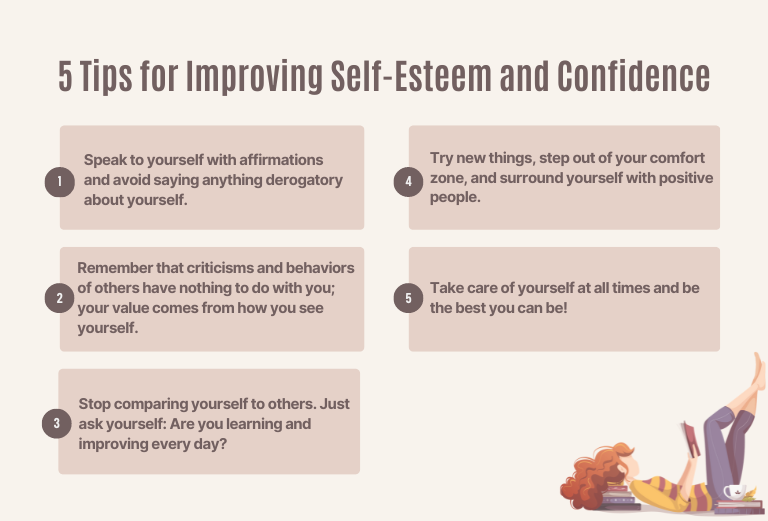
Self-esteem and self-confidence are not just ideas; they are something we practice every day.
The importance of self-love and self-acceptance is not to let others see the best in you. Rather, it’s about self-awareness of how special you are and being able to love and accept yourself for who you are, so that every moment you are alone with yourself is a happy one.
If you are experiencing difficulties in building your self-esteem and self-confidence, feel free to write to us and share your difficulties. Or, if you’ve gone through a rebuilding process and are surprised to discover something that has made a huge difference in your life, we’d love to hear your story.
5 FAQ Questions & Answers
Q1: What’s the core difference between self-esteem and self-confidence, and why does it matter?
Self-esteem is your overall sense of your own worth as a person – a deep, relatively stable inner belief about whether you are fundamentally valuable and lovable. Self-confidence is more situational – it’s your belief in your ability to handle specific tasks, situations, or challenges. You can have high confidence in one area (say, your professional skills) while still carrying low self-esteem at your core. This distinction matters because improving self-confidence through external achievements won’t automatically fix low self-esteem. The inner work of self-worth must be addressed directly.
Q2: Why does low self-esteem often get worse when I compare myself to others?
Because comparison activates the brain’s threat-detection system – when you perceive yourself as falling short of someone else, your nervous system registers it as a form of social danger. This is especially potent on social media, where you’re comparing your full inner reality to someone else’s curated highlight reel. The antidote is what this article points to: shifting focus from how others perceive you to how you genuinely perceive yourself. Your worth is not relative – it doesn’t go up or down based on what someone else achieves.
Q3: How do I stop negative self-talk when it feels completely automatic?
The automatic quality of negative self-talk is exactly why awareness is the first step – you can’t change what you haven’t noticed. Start by simply observing without reacting: when the inner critic speaks, write it down rather than arguing with it or believing it. Over time, you develop the ability to see the thought as a thought rather than a fact. From there, you can begin to challenge it with evidence and gently replace it, as described in Step 2 of this article. The process is not instant, but the gap between having a negative thought and being controlled by it gradually widens.
Q4: Can improving self-esteem actually change how others treat me?
Yes – and this is one of the most powerful ripple effects of this work. When your self-esteem is low, you unconsciously signal to others that you don’t expect to be treated well, and people often take their cues from how you treat yourself. As your self-esteem rises, you carry yourself differently, communicate your needs more clearly, hold firmer boundaries, and naturally attract relationships that reflect your growing sense of worth. The change begins internally but it reshapes your external world in time.
Q5: How do I maintain confidence during setbacks and criticism without falling apart?
The key is building what researchers call “contingency-free” self-esteem – worth that doesn’t rise and fall with every success or failure. This is built through the practices in this article: self-compassion in moments of mistake, a growth mindset that treats setbacks as information rather than verdicts, and a support network that reminds you of your value when you temporarily forget it. Criticism and failure are inevitable; what changes is your relationship to them. The goal isn’t to be unaffected – it’s to recover more quickly and return to your own steady inner ground.
“This article reflects personal experience and is not a substitute for professional therapy.”